
The “Two Days a Day” Lesson That Built Taylor Guitars
Guy Raz Newsletter – January 30, 2026

I didn’t go into this interview expecting to take notes on working capital.
I thought we’d talk about wood. About tone. About Taylor Swift’s bright blue koi fish guitar (that Bob Taylor handmade—and don’t worry, we DID talk about that famous guitar and the story behind it!)
But the deeper story here is not celebrity. It’s what happens when two young guys buy a tiny, messy little guitar shop in 1974 for $3,700… and then spend the next decade learning, inch by inch, how to turn craft into a company.
Taylor Guitars is now a global brand with revenue well into the nine figures. Their guitars are everywhere. They’ve made millions of them. And yet Kurt Listug and Bob Taylor still talk like builders. Like people who remember what it felt like to be broke, embarrassed, and stubborn enough to keep going anyway.
Here are five lessons I took from the conversation.
1) Build the thing people can feel, not the thing you can explain
Bob Taylor’s early breakthrough wasn’t a flashy invention. It was a simple, physical decision: shave down the neck. Lower the strings. Make the guitar easier to play.
At the time, acoustic guitars had what players called “baseball bat necks.” Thick. Hard to grip. Tough on your hands. Bob didn’t know the rules well enough to be intimidated by them. He just kept shaving the wood until it felt good in his hand.
Then he put it in other people’s hands, and they were amazed.
There’s something here that applies far beyond guitars. Your best differentiation may not be a feature list. It may be a sensation. A friction removed. A moment where a customer thinks: Oh. This is easier. This feels right.
A lot of brands try to win with messaging. Taylor won, early on, with muscle memory.
2) The goal is not speed. The goal is finished
One of my favorite moments in the interview is when Bob tells a story about meeting an older guitar maker who worked completely differently.
Taylor was trying to scale by batching. Make ten bridges. Bend ten sets of sides. Do everything in groups so you “get nine of them for free.”
The older builder listened and then asked a question that changed everything:
Would you rather have ten half-done guitars… or one done guitar?
That line hit Bob like a brick to the forehead. He went back to the shop and changed the whole system. The company moved from batches to flow. One guitar at a time moving down the line, with multiple guitars in process, but always pushing toward finished.
This is one of those deceptively simple lessons that founders have to learn the hard way.
Work in progress is not progress. It’s inventory. It’s cash tied up. It’s stress. It’s hope disguised as productivity.
Finished ships.
3) “Two days a day” is the real compounding advantage
When Bob describes the early years, he says something that made me pause: he worked two days a day.
The first “day” was building guitars. The second “day” was building tools to make tomorrow’s guitar easier to build.
Sometimes the tool was just a stick with two marks on it so he didn’t have to grab a tape measure. Sometimes it was a jig. Sometimes it was a machine that could bend a guitar side in one minute instead of a half hour.
But the principle is the same: he refused to accept that the work had to feel like Groundhog Day.
This is compounding, but not the way people usually talk about it. Not “growth hacks.” Not “scale.”
It’s the compounding of small reductions in friction. The compounding of fewer mistakes. The compounding of doing the hard thinking once so you don’t pay for it every day after that.
Most teams only do Day One. They build. They ship. They sprint.
The teams that win over decades also do Day Two.
4) The best co-founder skill is agreement that leads to motion
If you’ve ever watched a partnership slowly corrode, this part of the story will feel familiar.
Taylor started as three partners: Bob, Kurt, and their friend Steve. Over time, Bob and Kurt realized they saw the world the same way. They moved quickly. They could say, “That’s not working. Stop doing it. Try this instead.”
Steve had a different style. More conservative. More attached to the old model. And in a small business, one person’s reluctance can turn into a handbrake on everything.
Kurt makes a comparison I’ve never heard in a business interview, and it’s perfect: it’s like dating someone where you can never agree on what to do. What movie to watch. What trip to take. So nothing happens.
Then they did the unglamorous, grown-up thing: Kurt had a lawyer draft a buy-sell agreement when they were barely more than kids. And years later, that piece of paper prevented a breakup from becoming a catastrophe.
If you are building with partners, there are two takeaways here:
Chemistry matters, but so does a shared bias toward action.
Paperwork is not pessimism. It’s protection for the thing you’re trying to build.
5) Treat the early grind as tuition, not failure
This is the line I keep thinking about.
Eight years into the business, Taylor Guitars was doing about $120,000 to $130,000 in annual revenue. That is slow growth. Painfully slow. The kind of slow that makes you question your own sanity.
Bob’s reframing was startlingly calm: this is my education.
He compared it to people paying for medical school or architecture school for years, going into debt, and coming out later with skills. Why, he asked, did he think that as a 19-year-old he was “worth money”?
That’s not a romantic take. It’s a practical one. It turns patience into a strategy instead of a personality trait.
And then he added another move that felt almost like behavioral finance: he wanted the habit of paying themselves weekly, no matter how small. They did the math and decided they could pay themselves $15 every Friday.
Not because $15 mattered. Because the habit mattered. Because it forced them to remove what was blocking cash flow. Because it made the business real.
That’s founder psychology in its purest form: create a system that pulls you forward, even when motivation fails.
There’s more in this story, of course. The Prince guitar that couldn’t say “Taylor” on it. The slow, steady shift from “granola guitars” to pop stages. The way they handled the COVID demand spike by canceling $50 million in dealer orders so they wouldn’t flood the channel and wreck their partners. The decision to transition the company to 100% employee ownership through an ESOP, and the way Bob talked about “investing in the inevitable.”
But the five lessons above are the ones I keep circling back to because they’re not about guitars.
They’re about building anything difficult with limited resources, in an industry that changes with culture, and doing it for long enough that luck has time to find you.
Or as Bob put it in the simplest possible way:
One brick at a time. That’s how you build a wall.
—Guy

P.S. If you loved the episode, follow the show in your podcast app so you never miss one. And please SHARE this newsletter so others can learn from some of the world’s greatest entrepreneurs!
On HIBT This Week!

How Taylor Guitars Went From A $30,000 Repair Shop to Nine-Figure Empire
In the early 70’s, Bob Taylor and Kurt Listug scraped together $3,700 to buy a tiny guitar repair shop in San Diego.
At the time, the shop was doing about $30,000 a year. Bob had learned to build guitars (because he couldn’t afford them). And Kurt loved music but didn’t want a desk job.
Neither had big entrepreneurial dreams… They just wanted to work around guitars and make a living.
What followed were years that should have destroyed the business: a bad distributor deal, a brutal market crash, and growth so slow that five years in, they were paying themselves $15 a week.
It’s a miracle Taylor Guitars made it past those early years.
So how in the world did two guys who could barely afford rent build one of the world’s most respected guitar brands?
The answer involves Prince’s purple 12-string, another star by the name of Taylor, and Bob’s philosophy about the one thing that’s inevitable in every founder’s life.
HIBT Advice Line: Slow, Profitable Growth
This week on the Advice Line, I’m joined by Mark Cuban – serial entrepreneur, former Dallas Mavericks owner, and now founder of Cost Plus Drugs. His philosophy remains unchanged: protect cash, focus on fundamentals, and use every tool available to learn faster.
First up, Lucy: Should I launch in big box retail with my innovative butter jars?
Lucy’s One Trick Pony hit $1M in revenue with their unique peanut butter packaging and now a major retailer wants in. Mark’s warning was immediate: big box means stocking fees, promotional costs, and upfront cash that kills margins. And since Lucy raised capital and owns just over 50%, another funding round could cost control. The opportunity will still be there later, prioritize profitability now.
Next, Macy: How should I market my product?
Macy’s Girlyish Skincare offers dermatologist-approved routines for tweens influenced by harmful trends. Mark was clear: market to parents first… they control the credit cards. And focus on education-based, in-person marketing at community events where families attend together. Learn through real-world sales.
Then Dan: How do I rebuild my handcrafted business?
Dan’s Imperium Shaving hit $500K pre-pandemic but collapsed during COVID. Mark’s advice: raise prices and sell the maker, not the product. You’re selling craftsmanship and story – lean into extreme premium positioning. Fewer high-profit sales beat scaling volume without a team.
And finally, Kristen: Should I expand my product line?
Kristen’s Northern Classics expects just under $1M but isn’t profitable yet. Mark’s hard truth: expansion adds risk when you’re not profitable. Use off-season to optimize operations. Operational efficiency comes before product expansion.
Mark leaves us with this: Today’s founders have unprecedented advantages through AI. Stay relentlessly curious, use every tool to learn faster, and focus on what you control. In uncertain markets, fundamentals matter more than ever.
If you would like to be featured on an upcoming episode, call and leave a 1-minute message at 1-800-433-1298 or send a voice memo to hibt@id.wondery.com
Wow in the World!

A Burping Baby Dragon Adventure!
Grandma G-Force and Mindy are back from spelunking in Italy, and they brought home the most AMAZING souvenir ever – a creature that looks like a tiny baby dragon!
Meet the olm, a super rare salamander that lives its entire life in pitch-black caves and has NO EYES because it never sees sunlight! Instead of seeing, these incredible animals use smell, vibrations, and can even sense tiny electrical signals in the water.
But here’s the really mind-blowing part… olms can go YEARS without eating, live for over 100 years, and sometimes release bubbles that look exactly like burps!
We dive deep underground to discover how these pale, squishy, wriggly creatures survive in places where almost nothing else can live. What other amazing secrets are hiding in the darkest caves on Earth?
From the HIBT Archives!
Serial Entrepreneur: Mark Cuban
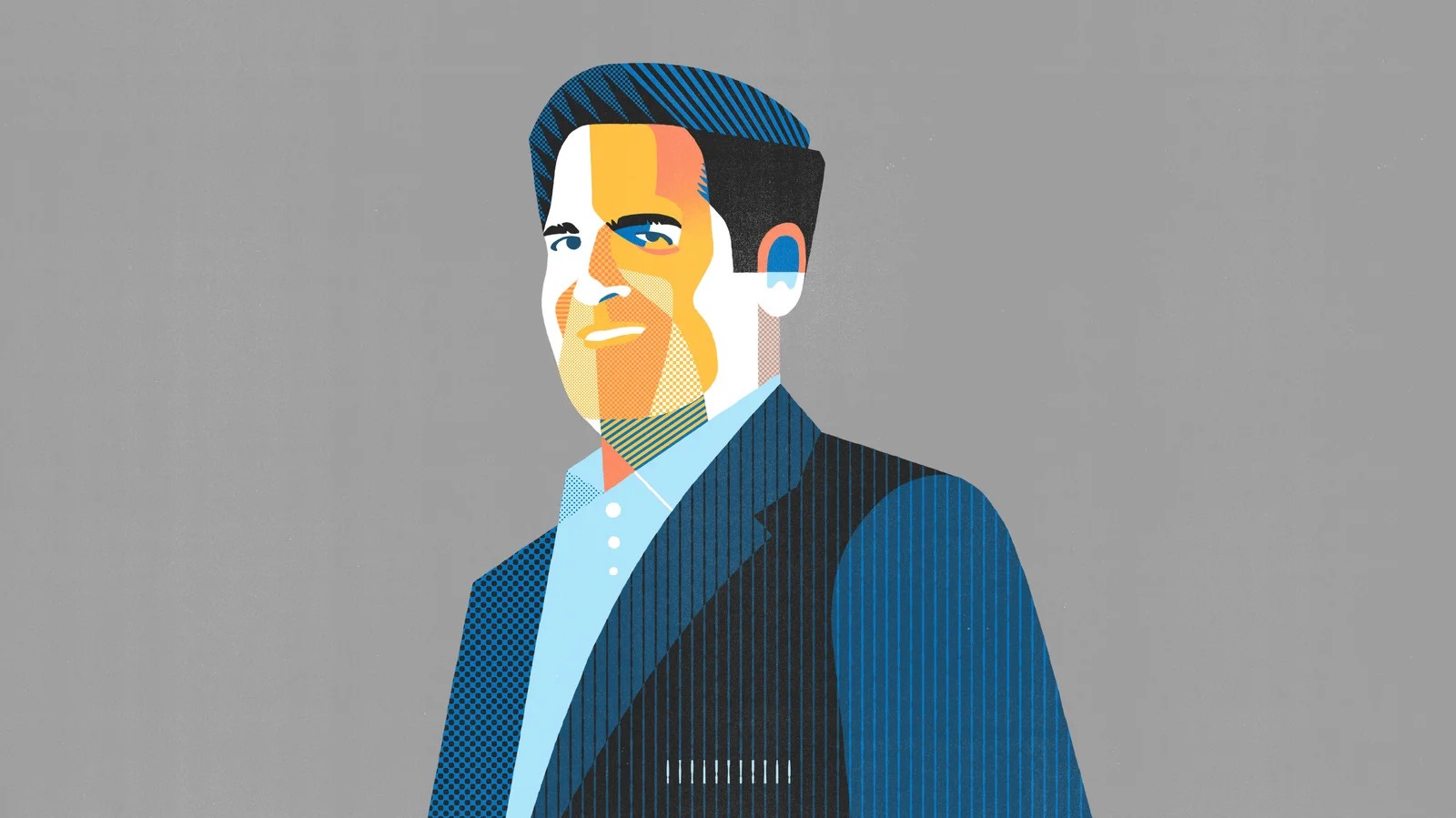
Before Mark Cuban became the outspoken billionaire owner of the Dallas Mavericks, he was a bartender in Dallas who hustled for every dollar he made. That restless energy would come to define his entire entrepreneurial journey.
Cuban’s first real success came in 1990 with MicroSolutions, a computer consulting company he started after teaching himself about software by reading manuals. He sold it for $6 million, then immediately jumped into his next venture: Broadcast.com, an internet radio company.
The timing was perfect. This was 1995, and streaming audio was revolutionary. In 1999, Yahoo acquired Broadcast.com for $5.7 billion in stock, making Cuban a billionaire at 40.
But Cuban’s defining move wasn’t technical, it was personal.
He used the sale to buy the struggling Dallas Mavericks in 2000, transforming them from NBA laughingstocks into champions. His courtside antics and player-first approach changed how sports franchises operate forever.
Cuban proved that being a serial entrepreneur isn’t just about starting companies, it’s about applying entrepreneurial thinking to everything you touch, whether that’s software, media, or basketball.
See you next time!

What do you want more or less of?
Just send a tweet to @guyraz or a message on IG to @guy.raz or LinkedIn and put #GuyRazNewsletter at the end so I can find it.
Ready to Launch Your Business?

Wondery Shop!

Great reminder and LOVED this article - most good things take TIME to build