
He Turned Down Every Single Investor. Then Built a Billion-Dollar Company Anyway.
Guy Raz Newsletter – May 14, 2026

John Gabbert is not the kind of founder who ends up on magazine covers or TED stages.
He’s never raised outside capital. He’s never taken his company public. He spent decades quietly building one of the most respected furniture brands in America, mostly by doing things that conventional business logic would have told him not to do.
I talked to John recently on How I Built This, and what struck me most was how consistent he was. The same instincts he had at 23 running his father’s store are the ones that guided every major decision at Room and Board for the next fifty years.
Here are five things he said that I keep thinking about.
1. The decisions you don’t make are often your most important ones.
At some point in the late 1990s, John found a location in Los Angeles that he loved. The team sat down, talked it through, and said no. They weren’t ready. Three years later, they opened in San Francisco and New York within six months of each other, and both stores thrived.
John put it in a way I haven’t been able to stop thinking about: “People remember the decisions that they made where they did something. Sometimes the decisions you made where you did nothing is the most important decision in the business.”
Most entrepreneurs are wired to move, to act, to capture every opportunity before someone else does. John built a billion-dollar company partly by training himself to resist that instinct when the timing wasn’t right.
2. Keeping prices fair is also a business strategy.
From early on, Room and Board had a simple rule: no sales, no volume discounts, no special pricing for interior designers. One price for everyone.
John explained the thinking this way. He said he wanted to treat every customer like a best friend, and asked himself what it would feel like to tell a friend they could have paid 20 percent less if they’d come in last week. The answer was obvious.
But there’s a less obvious operational benefit too: without sales, the business runs in a straight line. No artificial peaks, no chaotic surges in fulfillment, no customers waiting three months for a sofa because you ran a promotion that overwhelmed the warehouse.
Pricing discipline, it turns out, is logistics discipline.
3. Growth targets can be the enemy of good decisions.
When Room and Board started doing well, the calls came in constantly. Private equity firms, investors, strategic partners, all with the same pitch: we can help you grow this faster. John’s answer was always no.
His reasoning wasn’t sentimental. He’d looked at the track record. “Generally they’ve ruined more businesses than they’ve grown,” he told me.
But beyond rejecting outside capital, John also rejected the internal version of this pressure. Room and Board never had a plan that said we need to hit X stores or Y revenue by a certain date. Growth happened organically, when opportunities were genuinely right.
“You make a bunch of bad decisions” when you force yourself to hit arbitrary growth targets, he said. The LA store they passed on is the proof of that.
4. Your suppliers can be partners, not just vendors.
The steel manufacturer that Room and Board works with today started out making security gates. John walked in and asked if they wanted to make furniture instead. That relationship has now lasted decades, and the company became Room and Board’s second-largest manufacturer.
What John built with that manufacturer, and with many others, was something he described as being “vertically integrated through partnership.” He cares about whether they’re profitable. He works with them on new product development. He balances business across their operation so they’re not dangerously dependent on one customer.
In return, he gets quality, continuity, and loyalty that a purely transactional vendor relationship could never produce. Most companies treat their supply chain as a cost to be managed. John treated his as a competitive advantage to be cultivated.
5. Hardship is not a detour. It’s the road.
John spent roughly a decade after leaving Gabberts in what he described, looking back, as a scattered and unfocused period. He started a kids furniture business. He bought a design studio. He ran a wholesale showroom.
None of it was going anywhere meaningful. He was 40 years old, estranged from his family, competing in the same city as his father’s store, and running businesses he didn’t believe in. That’s when the clarity arrived.
“Life’s not about how fast you run or how high you jump,” he said. “But how well you bounce.” The patience he developed in that decade, and the hunger it created, turned out to be part of what made Room and Board what it became.
He didn’t know who he was as a founder until he spent years figuring out who he wasn’t.
John Gabbert is 78 years old. He stepped down as CEO in 2017 and has since transitioned the company to an employee ownership structure, so the people who helped build it will benefit from its future.
Take a listen to the episode. It’s a good one!

P.S. If you loved the episode, follow the show in your podcast app so you never miss one. And please SHARE this newsletter so others can learn from some of the world’s greatest entrepreneurs!
On HIBT This Week!

Room & Board: How a Family Feud Built a Furniture Empire
John Gabbert grew up in his family’s furniture store in suburban Minneapolis. By 23, he was running the place.
Then he took a trip to Sweden and walked into an obscure store called IKEA. What he saw changed everything, not just what he thought about furniture, but what he thought about the entire industry.
He came home with a new vision for the business. But… his father (the owner) wanted nothing to do with it.
What followed was a deal to buy the family business that fell apart on the day it was supposed to close. And a family rift that lasted nearly a decade.
John walked away with a tiny spinoff brand called Room & Board.
But, sadly, he had no family support, no outside investors, and certainly no safety net.
From there, John built Room & Board his own way. Slowly. Deliberately. Saying no to almost everything the industry told him he should do. When competitors chased growth, John chased durability.
So how did a family feud and a trip to Sweden lead to one of America’s most distinctive furniture brands? What was the unconventional manufacturing model that made it all work?
And what did John’s father say about him in one of his final moments?
Learn all this and more on this episode of How I Built This!
HIBT Advice Line: Scale Deliberately
This week on the Advice Line, we’re doing a mashup of three former guests, three callers, one theme. Joining me are Chieh Huang of Boxed, Hernan Lopez of Wondery, and David Neeleman of JetBlue.
First up, Kristina: How do I scale a pottery studio into something bigger?
Kristina’s Seagrass Pottery in Florida runs workshops, memberships, retreats, and wholesale. She wants to scale beyond a single location, but Chieh and I converged on a more fundamental question she needs to answer first: what is the business actually trying to be?
Next, Jim: Should I take a retail deal or stay direct-to-consumer?
Jim’s Lemur Strap is a patented camera carrying system that’s caught the attention of a big retailer. But this route means more exposure but thinner margins. Hernan leaned toward DTC… but flagged a structural problem with the product that makes that path harder
Finally, Will: How do you change a behavior that’s been ingrained for decades?
Will’s Tool Club delivers rental tools straight to your door. But tool ownership and traditional rental are deeply ingrained habits. David’s advice: become the face of a movement, and show people exactly how much money they’re leaving on the table.
The throughline across all three calls: scaling isn’t about chasing every channel. It’s about picking the right ones and resisting the pressure to dilute what made the business worth scaling in the first place.
If you would like to be featured on an upcoming episode, call and leave a 1-minute message at 1-800-433-1298 or send a voice memo to hibt@id.wondery.com
Wow in the World!

Dogs Learn Words by Eavesdropping!
What happens when you combine a spelling bee, a memory game, and the fluffiest competitors on Earth? Welcome to the Dog Vocab World Championship!
But here’s the mind-blowing part… scientists in Budapest found that some dogs can learn new words just by OVERHEARING humans talk to each other! That’s right, your dog might be secretly learning vocabulary while you chat with your friends, without anyone directly teaching them!
In fact, some Border Collies can recognize hundreds of words, and in rare cases, over a THOUSAND!
Will the doggie champions remember which word belongs to which toy under the bright lights and barking crowds? Tune in to discover why your four-legged friend might be the ultimate eavesdropper!
From the HIBT Archives!
Roblox: David Baszucki
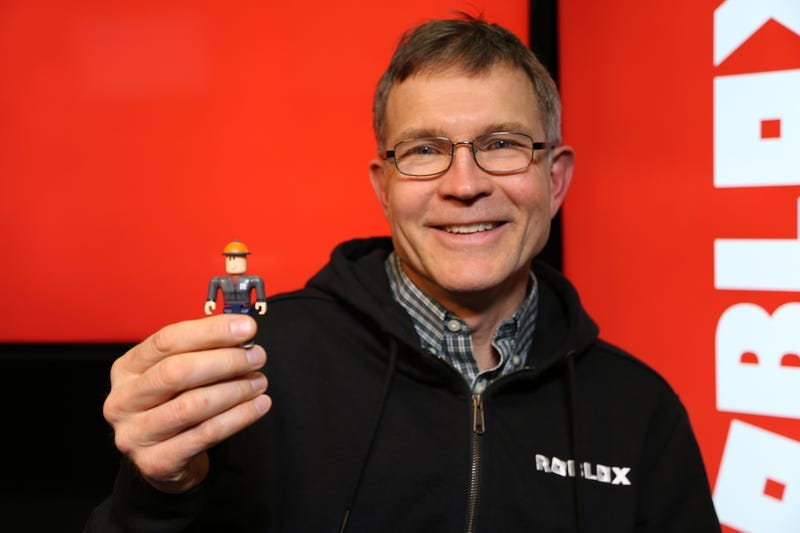
After selling his educational software company in the early 2000s, David Baszucki faced a classic entrepreneur’s dilemma: what comes next?
For his next idea, he wanted something with mass appeal, something that could truly go viral. And the answer came from watching how kids interacted with technology: they didn’t just want to consume content, they wanted to create it.
So in 2006, David and co-founder Erik Cassel launched Roblox with a radical premise: instead of making games, they’d build a platform where anyone could make games.
Users could design their own avatars, create virtual worlds, and play millions of different experiences created by other players. It was part game, part social network, part creative studio.
And it was unlike anything else in the market.
Today, with millions of young creators building businesses on Roblox, David’s platform has become more than a game, it’s a new economy where imagination literally pays the bills.
See you next time!

What do you want more or less of?
Just send a tweet to @guyraz or a message on IG to @guy.raz or LinkedIn and put #GuyRazNewsletter at the end so I can find it.
Ready to Launch Your Business?

Wondery Shop!

I love this example. Thank you, Guy Raz, for bringing these powerful, wonderful stories to us. We need all the entrepreneurial role models we can get.